Sustainable Living Toolkit
Living more sustainably not only helps the planet; it also helps us to save money and become more resilient in times of uncertainty.
This becomes more important with every passing day as energy and living costs rise due to the increased pressures of climate change.
This Toolkit is designed to demonstrate practical ways to help you save money and become more resilient, while also supporting a just and equitable transition to living more sustainably.
Click on the links below for practical easy-to-follow insights, tips and tools.
1. Energy
Many homes and offices have very high energy and heating costs. Here are 3 main ways to save energy in your homes.
1. Using Less Energy
What is the single biggest user of energy in the home?
Over 80% of energy used in the home is used for either space heating or water heating.
Anything that uses energy to heat (or cool) consumes a lot of energy.
The top 10 energy guzzler devices in the home include:
- Your Heating System
- Electric shower
- Hot water immersion
- Kettle
- Dryer
- Oven
- Washing machine
- Electric plug-in radiator
- Electric blow heater
- Fridge/ Freezer
Mindful use of these heating devices will go a long way to reducing your home energy costs. Click on the ‘Want to learn more?’ link below for further tips.
2. Reducing Heat Loss
Poor insulation is a major factor in energy costs.
Many Irish homes – particularly older houses – lose heat through poorly insulated walls, drafty windows, floors and attic spaces, and outdated ventilation systems.
The good news? Most of that heat loss can be fixed with the right improvements.
Click on the ‘Take One Action Today’ link below for further info.
& Here’s an engaging video on how to address home heat loss issues:
3. Using Renewable Energy
One of the main features of our times is an international movement away from using traditional fossil fuels (coal, oil, diesel, petrol and gas) that are the main causes of climate change.
The focus now is on reducing and replacing these fossil fuels with more renewable sources of energy.
These include using more energy efficient systems and renewable energy from solar and wind.
Renewable energy in the form of solar PV panels is becoming more and more affordable and efficient every year with a lot of grant support to make it possible.
For further info. click on the ‘Take One Action Today’ link below.
& here’s an inspiring renewable energy upgrade video from SEAI:
Want To Learn More
Energy Saving at Home Booklet
This easy-to-use booklet from Tipperary based Ecovision shows 90 Practical Ways to Save Energy at Home.
Online Energy Cost Calculator
This useful online Energy Cost Calculator from the UCD Energy Institute and SEAI analyses your electricity bills and advises you on how you can save.
Energy Guidance for You & Your Home
This useful online guide from SEAI (Sustainable Energy Authority of Ireland) has many tips, insights plus grants.
Take One Key Action Today!
If You Are A Council Tenant
Ask your local authority what home energy improvement schemes are available.
If You Are A Homeowner or Renter
Look up what grants are available from the SEAI (Sustainable Energy Authority of Ireland) to reduce energy costs at home.
If You Are An Active Community Member
Consider forming an SEC (Sustainable Energy Community) to explore community energy savings together.
Contact your local development company like STDC or SEC mentor for your area for advice on how:
& Here’s an inspiring SEC (Sustainable Energy Community) video from SEAI:
Contact your local development company like STDC or SEC mentor for your area for advice on how:

2. Transport
In today’s frantic world we are almost always on the move. The average Irish household spends over €7,000 on transport every year. Plus, transport accounts for 20% of global of all global greenhouse gas emissions. So, saving money on transport makes a lot of sense; both on an individual household and on a global scale!
1. Active vs Smarter Energy
In order to reduce emissions from transport and travel, and to save money, there is now a big emphasis on Active and Smarter travel.
Active Travel is using your own energy to travel when possible, by walking, cycling or using any non-motorised vehicle. This not only saves you money but also improves both your physical and mental health.
Smarter Travel is about making smarter (more sustainable choices) about how we travel by using Active Travel, public transport, carpooling and/or less intensive fossil-fuel (diesel and petrol) based transport where and when possible. In rural Ireland this can prove challenging, however with local link and public bus services expanding every year, smarter travel options are increasing all the time.
If you would like to learn more about ways to reduce your climate impact & save money through Active and Smarter travel initiatives there are some really useful links below.
2. More Fuel Efficient and/or Less Driving
The best way to save money and reduce emissions is to drive less or not to drive at all!
But if you need to drive a car there are many tips on how to do this in a more fuel efficient way. SIMI (Society of the Irish Motor Industry) have developed this useful guide:
Electric cars may have felt too expensive for some people, but they are becoming more affordable every year. And direct comparisons show that they are euro for euro less expensive to run than diesel or petrol equivalents. And as the infrastructure for recharging electric cars expands and driving ranges increase, you might consider going electric the next time you are changing your car.
3. Reduce Flying
Flying releases an incredible amount of carbon dioxide (CO2) into the atmosphere.
For example, a single economy flight can produce more than 10% of an average person’s annual carbon footprint! Taking one return flight to New York generates more carbon dioxide (CO2) emissions than driving a petrol or diesel car for a whole year!
So when planning your holidays think about alternatives to flying e.g.
Want to Learn More?
Smarter Travel Programme
TFI (Transport For Ireland) has developed this Smarter Travel programme to support all the different forms of Active & Smarter sustainable travel.
Using Public Transport & TFI App
Ireland’s public transport system is improving year-on-year due to significant investment, expansion of rural bus services under the Connecting Ireland program, and record-breaking passenger numbers. TFI (Transport for Ireland)’s app will help you plan your public transport journey anywhere in Ireland.
Using Public Transport & Local Link
Local Link is expanding every year as part of the wider improvement of Ireland’s public transport system.
Take One Key Action Today!
Just once this week decide to make a Smarter Travel journey (walking, cycling, public transport or carpooling) instead of using your car. Who knows, you just might decide it is a smarter way to travel!
3. Food
Unnecessary food waste is such a waste of money & valuable resources. The average Irish household can save around €700 a year by avoiding food waste. Plus, food production is a major contributor to climate change. A recent UN study revealed that food systems account for over one-third of all global greenhouse gas emissions. So saving on food waste makes a lot of sense; both on an individual household and on a global scale!
Want to Learn More?
There are a multitude of resources out there at present to help us to reduce our food waste, save money and improve our food resilience, and here are some of the key ones:
Stop Food Waste
Here is a really useful website sharing resources on how to reduce food waste through changing the way that we do shopping, storage and cooking.
Eat Local
Supporting local food producers will reduce the waste associated with international transport emissions and improve your local economy. Plus, local and organic food is seasonal which leads to a varied diet that is healthier and more in sync with the seasons. In addition, organic food means less pesticides and reduced impact on overall biodiversity. Check the labels of food products and choose local and organic produce when possible.
GIY (Grow Your Own)
Most of our grandparents grew so much of the food that they ate, it gave them a direct relationship with their food and their local environment. There is a growing movement worldwide now to grow more of your own food. And it has proven wellbeing benefits including not only for your finances but also for your physical and mental health!
& Here’s an inspiring GIY video on how to start your own home vegetable garden:
Feeding Ourselves
This initiative is a dynamic, multi-actor network of farmers, land workers, researchers, activists, and advocates of short food supply chains, all working to cultivate resilient and thriving local food systems.
It is developed by Cultivate the Sustainable Ireland Co-op based in Tipperary. ~View more info. on:
Take One Key Action Today!
Take the first step to growing your own food at home or by joining a local food growing community or allotment!
4. Consumption
If everyone on planet Earth consumed as much as the average European, we would need over 4 planets of resources to support that lifestyle at current consumption rates! An ecological footprint that large is obviously not sustainable!
So, there is a large worldwide push now to move towards more sustainable models of consumption based around the three ‘Rs’:
- Reduce
- Reuse
- Recycle
By changing our consumption behaviour around the three ‘Rs’ we not only save money, we are also taking steps to reduce our ecological footprint.
This is embodied in the idea of a Circular Economy; a model where materials are reused and recycled for as long as possible, to drastically reduce resource consumption.
It’s a fancy term for the type of lifestyle that most of our grandparents’ generation lived. And it’s taking root right across all sectors of society.
Want to Learn More?
If you would like to learn more about our transforming consumption behaviour and ways to save money and energy, here are some useful links:
Reduce, Reuse, Recycle
The Three ‘R’s’ Explained in very accessible language
And there are so many online ways now to put the 3 ‘Rs’ into practice around clothing and fashion e.g.:
Mywaste.ie
Recycling Household Waste in Ireland
A really useful Citizens’ Information website.
Repak – Recycling Symbols Guide
Recycling is easy once you know how! But with so many symbols it can get a little confusing. So this simple guide to familiar symbols will help you make sense of it all.
Ireland’s leading online repair directory
Learn more about repairmystuff.ie.
Community Resources Network Ireland (CRNI)
CRNI is the representative body for community-based reuse, repair and recycling organisations in Ireland.
Water Consumption
Water may appear to be an endless free resource, especially here in rainy Ireland. However, water requires a lot of energy and resources to treat and to bring it from source to tap. So mindful use and consumption of our water is also a critical part of living sustainably.
Take One Key Action Today!
Would you ever consider starting a Circular Economy Repair Café in your community? Take inspiration from our neighbours in Clonmel.
5. Green Skills
The world is changing and so are we. As Ireland moves away from fossil fuels (coal, oil, diesel, petrol and gas) towards more renewable energies, the renewable energy sector is expanding on a yearly basis.
Recent research from the SOLAS Skills and Labour Market Research Unit (SLMRU) highlights that 75% of employment in Ireland now requires some level of green skills, underscoring the growing importance of sustainability across all sectors of the economy.
So that means greater employment opportunities for people who wish to work in the Green Skills / Renewable Energy areas like solar, retrofitting, wind energy, environmental management and ecology.
Want to Learn More?
If you would like to explore Green Skills & Retraining opportunities here are very useful links:
Solas Green Skills 2030 Programme
SOLAS – the state agency responsible for Further Education and Training (FET) in Ireland has developed a Green Skills 2030 programme that spans right across all sectors of the economy.
FET (Further Education and Training) Courses
Click here to find a Green Skill course that is right for you.
ETBI (Education & Training Boards Ireland)
Future Building Skills Climate & Green Career Pathway Chart.
NZEB (Net Zero Energy Building) Skills
Limerick and Clare ETB (Education and Training Board) for example is offering a number of construction training programmes designed to empower you with knowledge of the principles and practices required to meet the NZEB (Net Zero Energy Building) standard.
Take One Key Action Today!
Considering a change-of-direction in your work? Take a look at the Green Skills retraining programmes available in your area today!
6. Action
Taking individual action through the 5 steps outlined above is important. But individual action alone will not lead us to a more sustainable future. For this, taking action collectively, and advocating for change on a local, national and international level is essential. There are literally millions of groups working worldwide at present to build a more sustainable future.
So, you will definitely find one in your own local community. Here’s an inspiring video from Friends of the Earth showing the power of working collectively on both a local and international level:
Want to Learn More?
Here are key links that will support you in taking Local Climate and Environmental Action:
The Environment & You
The EPA (The Environmental Protection Agency) is the main public body responsible for protecting and improving the environment as a valuable asset for the people of Ireland.
This guide ‘The Environment & You’ is a really useful guide for understanding how you can support your local environment:
The Irish Environmental Network
The Irish Environmental Network is a network of national environmental non-government organisations (NGOs).
These NGOs are working to protect and enhance the environment and to promote the principles of environmental, social and economic sustainability.
& they are always looking for volunteers like you.
Find an organisation in your area:
Friends of the Earth
Friends of The Earth is an NGO that works on both a local and national level.
Their ‘Cuppa for Climate’ initiative is an inspiring way to take action locally in a friendly and informal way:
Local Biodiversity Action
The National Biodiversity Data Centre’s All Ireland Pollinator Plan is a great place to start looking at biodiversity projects in your area.
And Local Tidy Town groups are increasingly getting involved in local climate, environmental and biodiversity projects. Find your local Tidy Town group here:
Local County Council Climate Action
Every local authority in Ireland now has their own Climate Action Plan and a team in place to implement it. Look out for the local County Council Climate Action for your area and see how you can get involved e.g.:
And your local PPN (People’s Participation Network) provides an opportunity for the community voice to be represented on County Council Committees
Find your local PPN here:
Take One Key Action Today!
Consider getting involved in a local community, national and/or international organisation today!

7. Wellbeing
Climate change is gradually impacting every aspect of our lives. We are finally beginning to realise that the wellbeing of our planet is inextricably linked with our own wellbeing. Ours is a time full of possibility but also of change, instability and stress. New terms like ‘Eco-anxiety’ and ‘Eco-grief’ are emerging to describe how this time of change is impacting people’s mental and physical health and wellbeing.
So, it’s important to mind yourself; your own personal wellbeing is deeply interconnected with those around you including your local environment.
Want to Learn More?
There are so many resources out there at present to support your wellbeing that it could be the subject of its own dedicated toolkit.
So here are a number of useful starting points:
Spend Time in The Natural World
There is scientific consensus that spending time in the natural world provides multiple benefits for enhancing health and wellbeing, and these benefits are increasingly being recognised in policy at international, national and local levels. So put away your smart phone and get out there!
National Hiking Trails
Sport Ireland (previously known as the National Trails Office) maintains an online National Trails Register (currently >920 trails listed) that covers hiking trails, greenways and blueways:
Tipperary Hiking Trails
Ireland is bursting at the seams with incredible hikes. Here are ten Tipperary trails worth checking out:
Join a Community Group
Today nearly one in six people globally report feeling lonely and isolated. By volunteering you not only reduce your chances of becoming isolated, you can also contribute positively to the wider wellbeing of your community. Here are a few online directories to help you find a community group in your area:
Local Development Companies
Every county in Ireland has its own local development company (LDC) like us to support local community organisations and rural development.
Public Participation Network (PPN)
Each county in Ireland now has a PPN to improve how communities can participate in shaping local policies and plans. And each PPN has a directory of local community organisations including an Environmental pillar. Our local PPN in Tipperary is particularly strong in this area:
The Wheel
Ireland’s national association of charities, community groups and social enterprises with over 2,600 members.
Active Links
An online directory that lists over 1,500 Irish non-profit and community organisations.
The Irish Environmental Network
A network of national environmental non-government organisations (NGOs).
Mental Wellbeing
There are so many ways to support your mental wellbeing these days. Plus, there are a myriad of ways and organisations to support just that. There are far too many to list them all here, but here some useful starting points.
ETB Health & Wellbeing
ETB’s around the country have great health and wellbeing initiatives and locally Tipperary ETB (Education & Training Board) have developed a really helpful online directory, together with a useful online eZine, promoting positive mental and physical wellbeing.
Mindfulness
Meditation and mindfulness have become central tools in supporting people’s wellbeing through the stresses of modern life. There is now an extensive network of professional associations, dedicated practice communities, educational course providers, and online directories throughout Ireland, too many to list here. But here are good places to start:
Mental Health Wellbeing
MHI (Mental health Ireland) is the national mental health organisation dedicated to Educating, Empowering and Connecting Communities.
Mental Health Reform have created this really useful map of mental health services and supports around Ireland plus Mental Health Ireland offer incredible support in this whole area.
Ireland’s Wellbeing Frameworks
Ireland has developed a cross-government initiative to help improve our understanding of quality of life by bringing economic, societal and environmental impacts together under two national wellbeing frameworks.
A Wellbeing National Framework
And this has been adapted across the public sector including e.g. with ppntipperary.ie/wellbeing/
A Healthy Ireland National Framework
Look out for the local Healthy County Co-ordinator for your area e.g.:
Take One Key Action Today!
From the resources above, try out one new thing you have never tried before to support your wellbeing!
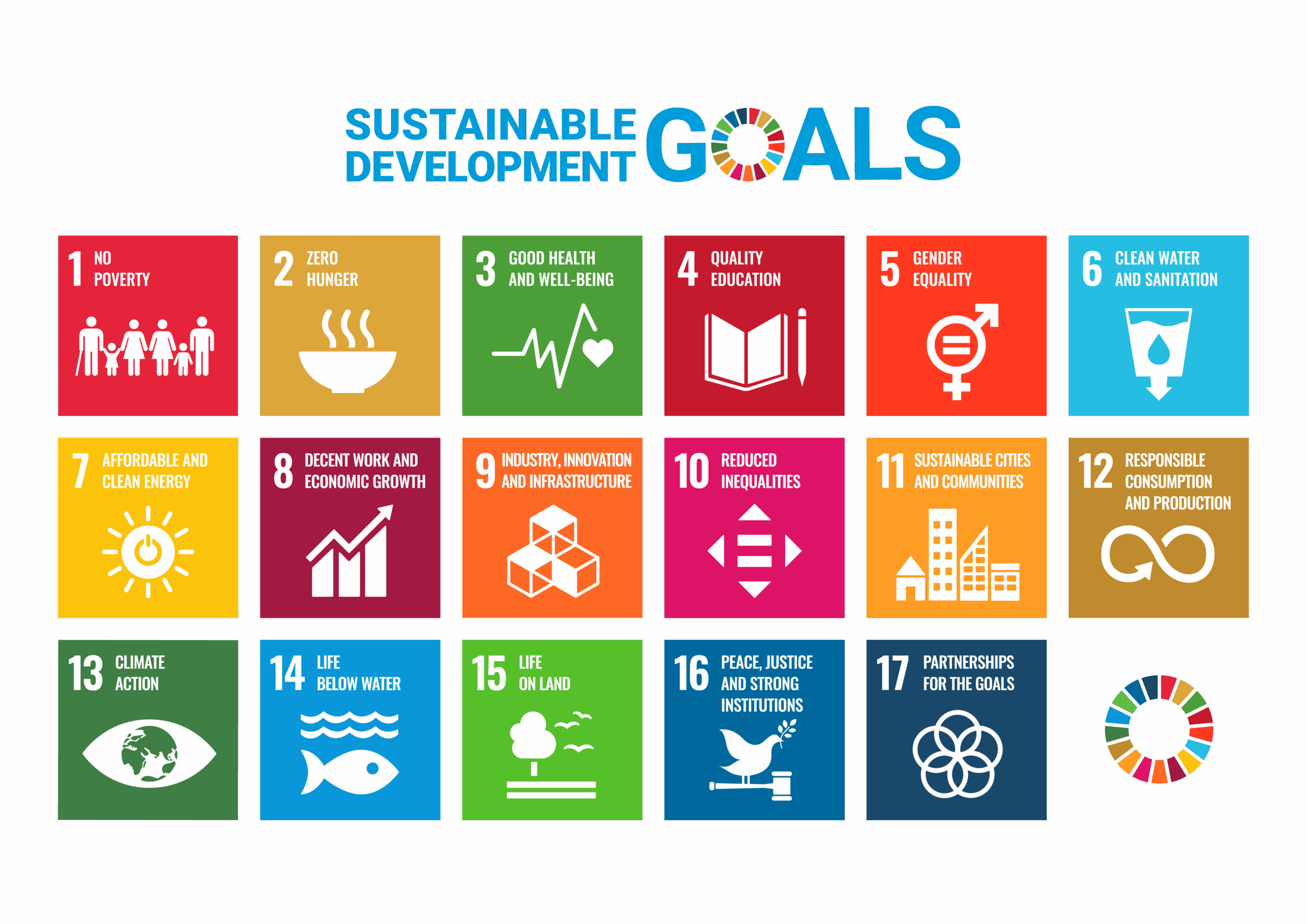
UN Sustainable Development Goals (SDGs)
In 2015, UN member states agreed to 17 global Sustainable Development Goals (SDGs) an international roadmap for collectively living more sustainably. Relevant SDGs are referenced within each specific category in this toolkit showing how local action can indeed become global action.